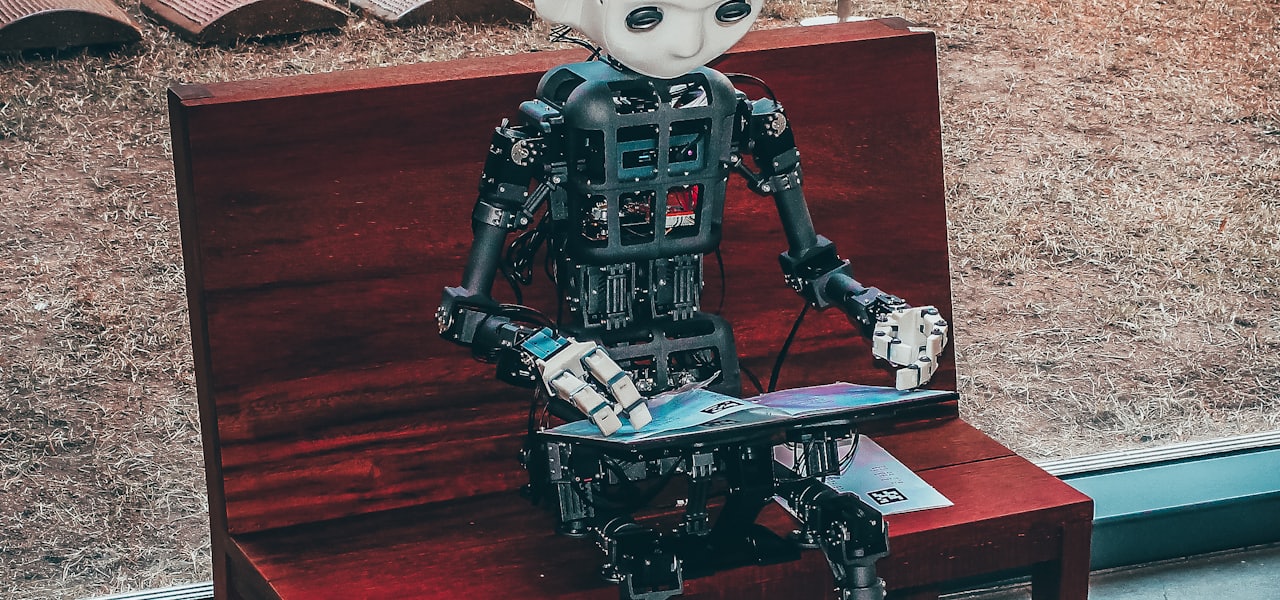
The ACL Data Collection Initiative (ACL/DCI) was a project established in 1989 by the Association for Computational Linguistics (ACL) to create and distribute large text and speech corpora for computational linguistics research. The initiative aimed to address the growing need for substantial text databases that could support research in areas such as natural language processing, speech recognition, and computational linguistics. By 1993, the initiative’s activities had effectively ceased, with its functions and datasets absorbed by the Linguistic Data Consortium (LDC), which was founded in 1992. == Objectives == The ACL/DCI had several key objectives: To acquire a large and diverse text corpus from various sources To transform the collected texts into a common format based on the Standard Generalized Markup Language (SGML) To make the corpus available for scientific research at low cost with minimal restrictions To provide a common database that would allow researchers to replicate or extend published results To reduce duplication of effort among researchers in obtaining and preparing text data These objectives were designed to address the growing demand for very large amounts of text arising from applications in recognition and analysis of text and speech. Its core objective was to "oversee the acquisition and preparation of a large text corpus to be made available for scientific research at cost and without royalties". == History == By the late 1980s, researchers in computational linguistics and speech recognition faced a significant problem: the lack of large-scale, accessible text corpora for developing statistical models and testing algorithms. Existing generally available text databases were too small to meet the needs of developing applications in text and speech recognition. The initiative was formed to meet this need by collecting, standardizing, and distributing large quantities of text data with minimal restrictions for scientific research. As stated by Liberman (1990), "research workers have been severely hampered by the lack of appropriate materials, and specially by the lack of a large enough body of text on which published results can be replicated or extended by others." The ACL/DCI committee was established in February 1989. The committee included members from academic and industrial research laboratories in the United States and Europe. The initiative was chaired by Mark Liberman from the University of Pennsylvania (formerly of AT&T Bell Laboratories). Other committee members included representatives from organizations such as Bellcore, IBM T.J. Watson Research Center, Cambridge University, Virginia Polytechnic Institute & State University, Northeastern University, University of Pennsylvania, SRI International, MCC, Xerox PARC, ISSCO, and University of Pisa. The project operated initially without dedicated funding, relying on volunteer efforts from committee members and their affiliated institutions. Key supporters included AT&T Bell Labs, Bellcore, IBM, Xerox, and the University of Pennsylvania, which allowed the use of their computing facilities for ACL/DCI-related work. Previously running on volunteer effort pro bono, in 1991, it obtained funding from General Electric and the National Science Foundation (IRI-9113530). == Data == As of 1990, the ACL/DCI had collected hundreds of millions of words of diverse text. The collection included: Wall Street Journal articles (25 to 50 million words); Canadian Hansard (parliamentary records) in parallel English and French versions: cleaned-up English Hansard donated by the IBM alignment models group (100 million words), and original Bilingual Hansard (from a different time period) obtained directly (200 million words). Collins English Dictionary (1979 edition), both as fulltext (3 million words) and as various "database" versions, constructed using "typographers' tape" donated by Collins, which were computer tapes containing the structured digital data used to typeset and print the 1979 edition of the dictionary; Emails from ARPANET newsletters for the ACM Special Interest Group on Information Retrieval Forum (IRLIST) and AIList Digest issues distributed over the ARPANET (AILIST) (5 million words), both collected by Edward A. Fox at VIPSU; Articles on networking (2 million words); U.S. Department of Agriculture Extension Service Fact Sheets (>1 million words); 200,000 scientific abstracts of about 1,500 words each from the Department of Energy (25 million words); Archives of the Challenger Investigation Commission, including transcripts of depositions and hearings (2.5 million words); Books from the Library of America, including works by Mark Twain, Eugene O'Neill, Ralph Waldo Emerson, Herman Melville, W.E.B. DuBois, Willa Cather, and Benjamin Franklin (130 books, 20 million words); Public domain books like the King James Bible, Tristram Shandy, The Federalist Papers; Several million words of transcribed radiologists' reports, donated by Francis Ganong at Kurzweil Applied Intelligence Inc (about 5 million words); The Child Language Data Exchange corpus of child language acquisition transcripts; U.S. Department of Justice Justice Retrieval and Inquiry System (JURIS) materials; The Swiss Civil Code in parallel German, French and Italian; Economic reports from the Union Bank of Switzerland, in parallel English, German, French and Italian; About 12K words of administrative policy manuals and 14K words of administrative memos, contributed by Geoff Pullum of U.C.S.C.; Material from various ACM journals and the ACL journal Computational Linguistics; The CSLI publications series: 50-100 reports (8K words each) and 5-10 books (80K words each). The initiative started with North American English text but expanded to include Canadian French and planned to include Japanese, Chinese, and other Asian languages. At least 5 million words from the collection were tagged under the Penn Treebank project, and those tags were distributed by DCI as well. After DCI was absorbed by the LDC, the datasets were curated under LDC. == Format == The ACL/DCI corpus was coded in a standard form based on SGML (Standard Generalized Markup Language, ISO 8879), consistent with the recommendations of the Text Encoding Initiative (TEI), of which the DCI was an affiliated project. The TEI was a joint project of the ACL, the Association for Computers and the Humanities, and the Association for Literary and Linguistic Computing, aiming to provide a common interchange format for literary and linguistic data. The initiative planned to add annotations reflecting consensually approved linguistic features like part of speech and various aspects of syntactic and semantic structure over time. == Examples == As an example of the use of ACL/DCI, consider the Wall Street Journal (WSJ) corpus for speech recognition research. The WSJ corpus was used as the basis for the DARPA Spoken Language System (SLS) community's Continuous Speech Recognition (CSR) Corpus. The WSJ corpus became a standard benchmark for evaluating speech recognition systems and has been used in numerous research papers. The WSJ CSR Corpus provided DARPA with its first general-purpose English, large vocabulary, natural language, high perplexity corpus containing speech (400 hours) and text (47 million words) during 1987–89. The text corpus was 313 MB in size. The text was preprocessed to remove ambiguity in the word sequence that a reader might choose, ensuring that the unread text used to train language models was representative of the spoken test material. The preprocessing included converting numbers into orthographics, expanding abbreviations, resolving apostrophes and quotation marks, and marking punctuation. As another example, the Yarowsky algorithm used bitext data from DCI to train a simple word-sense disambiguation model that was competitive with advanced models trained on smaller datasets. == Distribution == Materials from the ACL/DCI collection were distributed to research groups on a non-commercial basis. By 1990, about 25 research groups and individual researchers had received tapes containing various portions of the collected material. To obtain the data, researchers had to sign an agreement not to redistribute the data or make direct commercial use of it. However, commercial application of "analytical materials" derived from the text, such as statistical tables or grammar rules, was explicitly permitted. The initiative first distributed data via 12-inch reels of 9-track tape, then via CD-ROMs. Each such tape could contain 30 million words compressed via the Lempel-Ziv algorithms. The first CD-ROM distribution was in 1991, funded by Dragon Systems Inc. It contained Collins English Dictionary, WSJ, scientific abstracts provided by the U.S. Department of Energy, and the Penn Treebank.
List of large language models
A large language model (LLM) is a type of machine learning model designed for natural language processing tasks such as language generation. LLMs are language models with many parameters, and are trained with self-supervised learning on a vast amount of text. == List == For the training cost column, 1 petaFLOP-day equals 1 petaFLOP/sec × 1 day, or 8.64×10¹⁹ FLOP (floating point operations). Only the cost of the largest model is shown. The number of parameters is measured in billions, and the training cost is measured in petaFLOP-days. === 2018 === === 2019 === === 2020 === === 2021 === === 2022 === === 2023 === === 2024 === === 2025 === === 2026 ===
Correspondence analysis
Correspondence analysis (CA) is a multivariate statistical technique proposed by Herman Otto Hartley (Hirschfeld) and later developed by Jean-Paul Benzécri. It is conceptually similar to principal component analysis, but applies to categorical rather than continuous data. In a manner similar to principal component analysis, it provides a means of displaying or summarising a set of data in two-dimensional graphical form. Its aim is to display in a biplot any structure hidden in the multivariate setting of the data table. As such it is a technique from the field of multivariate ordination. Since the variant of CA described here can be applied either with a focus on the rows or on the columns it should in fact be called simple (symmetric) correspondence analysis. It is traditionally applied to the contingency table of a pair of nominal variables where each cell contains either a count or a zero value. If more than two categorical variables are to be summarized, a variant called multiple correspondence analysis should be chosen instead. CA may also be applied to binary data given the presence/absence coding represents simplified count data i.e. a 1 describes a positive count and 0 stands for a count of zero. Depending on the scores used CA preserves the chi-square distance between either the rows or the columns of the table. Because CA is a descriptive technique, it can be applied to tables regardless of a significant chi-squared test. Although the χ 2 {\displaystyle \chi ^{2}} statistic used in inferential statistics and the chi-square distance are computationally related they should not be confused since the latter works as a multivariate statistical distance measure in CA while the χ 2 {\displaystyle \chi ^{2}} statistic is in fact a scalar not a metric. == Details == Like principal components analysis, correspondence analysis creates orthogonal components (or axes) and, for each item in a table i.e. for each row, a set of scores (sometimes called factor scores, see Factor analysis). Correspondence analysis is performed on the data table, conceived as matrix C of size m × n where m is the number of rows and n is the number of columns. In the following mathematical description of the method capital letters in italics refer to a matrix while letters in italics refer to vectors. Understanding the following computations requires knowledge of matrix algebra. === Preprocessing === Before proceeding to the central computational step of the algorithm, the values in matrix C have to be transformed. First compute a set of weights for the columns and the rows (sometimes called masses), where row and column weights are given by the row and column vectors, respectively: w m = 1 n C C 1 , w n = 1 n C 1 T C . {\displaystyle w_{m}={\frac {1}{n_{C}}}C\mathbf {1} ,\quad w_{n}={\frac {1}{n_{C}}}\mathbf {1} ^{T}C.} Here n C = ∑ i = 1 n ∑ j = 1 m C i j {\displaystyle n_{C}=\sum _{i=1}^{n}\sum _{j=1}^{m}C_{ij}} is the sum of all cell values in matrix C, or short the sum of C, and 1 {\displaystyle \mathbf {1} } is a column vector of ones with the appropriate dimension. Put in simple words, w m {\displaystyle w_{m}} is just a vector whose elements are the row sums of C divided by the sum of C, and w n {\displaystyle w_{n}} is a vector whose elements are the column sums of C divided by the sum of C. The weights are transformed into diagonal matrices W m = diag ( 1 / w m ) {\displaystyle W_{m}=\operatorname {diag} (1/{\sqrt {w_{m}}})} and W n = diag ( 1 / w n ) {\displaystyle W_{n}=\operatorname {diag} (1/{\sqrt {w_{n}}})} where the diagonal elements of W n {\displaystyle W_{n}} are 1 / w n {\displaystyle 1/{\sqrt {w_{n}}}} and those of W m {\displaystyle W_{m}} are 1 / w m {\displaystyle 1/{\sqrt {w_{m}}}} respectively i.e. the vector elements are the inverses of the square roots of the masses. The off-diagonal elements are all 0. Next, compute matrix P {\displaystyle P} by dividing C {\displaystyle C} by its sum P = 1 n C C . {\displaystyle P={\frac {1}{n_{C}}}C.} In simple words, Matrix P {\displaystyle P} is just the data matrix (contingency table or binary table) transformed into portions i.e. each cell value is just the cell portion of the sum of the whole table. Finally, compute matrix S {\displaystyle S} , sometimes called the matrix of standardized residuals, by matrix multiplication as S = W m ( P − w m w n ) W n {\displaystyle S=W_{m}(P-w_{m}w_{n})W_{n}} Note, the vectors w m {\displaystyle w_{m}} and w n {\displaystyle w_{n}} are combined in an outer product resulting in a matrix of the same dimensions as P {\displaystyle P} . In words the formula reads: matrix outer ( w m , w n ) {\displaystyle \operatorname {outer} (w_{m},w_{n})} is subtracted from matrix P {\displaystyle P} and the resulting matrix is scaled (weighted) by the diagonal matrices W m {\displaystyle W_{m}} and W n {\displaystyle W_{n}} . Multiplying the resulting matrix by the diagonal matrices is equivalent to multiply the i-th row (or column) of it by the i-th element of the diagonal of W m {\displaystyle W_{m}} or W n {\displaystyle W_{n}} , respectively. === Interpretation of preprocessing === The vectors w m {\displaystyle w_{m}} and w n {\displaystyle w_{n}} are the row and column masses or the marginal probabilities for the rows and columns, respectively. Subtracting matrix outer ( w m , w n ) {\displaystyle \operatorname {outer} (w_{m},w_{n})} from matrix P {\displaystyle P} is the matrix algebra version of double centering the data. Multiplying this difference by the diagonal weighting matrices results in a matrix containing weighted deviations from the origin of a vector space. This origin is defined by matrix outer ( w m , w n ) {\displaystyle \operatorname {outer} (w_{m},w_{n})} . In fact matrix outer ( w m , w n ) {\displaystyle \operatorname {outer} (w_{m},w_{n})} is identical with the matrix of expected frequencies in the chi-squared test. Therefore S {\displaystyle S} is computationally related to the independence model used in that test. But since CA is not an inferential method the term independence model is inappropriate here. === Orthogonal components === The table S {\displaystyle S} is then decomposed by a singular value decomposition as S = U Σ V ∗ {\displaystyle S=U\Sigma V^{}\,} where U {\displaystyle U} and V {\displaystyle V} are the left and right singular vectors of S {\displaystyle S} and Σ {\displaystyle \Sigma } is a square diagonal matrix with the singular values σ i {\displaystyle \sigma _{i}} of S {\displaystyle S} on the diagonal. Σ {\displaystyle \Sigma } is of dimension p ≤ ( min ( m , n ) − 1 ) {\displaystyle p\leq (\min(m,n)-1)} hence U {\displaystyle U} is of dimension m×p and V {\displaystyle V} is of n×p. As orthonormal vectors U {\displaystyle U} and V {\displaystyle V} fulfill U ∗ U = V ∗ V = I {\displaystyle U^{}U=V^{}V=I} . In other words, the multivariate information that is contained in C {\displaystyle C} as well as in S {\displaystyle S} is now distributed across two (coordinate) matrices U {\displaystyle U} and V {\displaystyle V} and a diagonal (scaling) matrix Σ {\displaystyle \Sigma } . The vector space defined by them has as number of dimensions p, that is the smaller of the two values, number of rows and number of columns, minus 1. === Inertia === While a principal component analysis may be said to decompose the (co)variance, and hence its measure of success is the amount of (co-)variance covered by the first few PCA axes - measured in eigenvalue -, a CA works with a weighted (co-)variance which is called inertia. The sum of the squared singular values is the total inertia I {\displaystyle \mathrm {I} } of the data table, computed as I = ∑ i = 1 p σ i 2 . {\displaystyle \mathrm {I} =\sum _{i=1}^{p}\sigma _{i}^{2}.} The total inertia I {\displaystyle \mathrm {I} } of the data table can also computed directly from S {\displaystyle S} as I = ∑ i = 1 n ∑ j = 1 m s i j 2 . {\displaystyle \mathrm {I} =\sum _{i=1}^{n}\sum _{j=1}^{m}s_{ij}^{2}.} The amount of inertia covered by the i-th set of singular vectors is ι i {\displaystyle \iota _{i}} , the principal inertia. The higher the portion of inertia covered by the first few singular vectors i.e. the larger the sum of the principal inertiae in comparison to the total inertia, the more successful a CA is. Therefore, all principal inertia values are expressed as portion ϵ i {\displaystyle \epsilon _{i}} of the total inertia ϵ i = σ i 2 / ∑ i = 1 p σ i 2 {\displaystyle \epsilon _{i}=\sigma _{i}^{2}/\sum _{i=1}^{p}\sigma _{i}^{2}} and are presented in the form of a scree plot. In fact a scree plot is just a bar plot of all principal inertia portions ϵ i {\displaystyle \epsilon _{i}} . === Coordinates === To transform the singular vectors to coordinates which preserve the chi-square distances between rows or columns an additional weighting step is necessary. The resulting coordinates are called principal coordinates in CA text books. If principal coordinates are used for
Random indexing
Random indexing is a dimensionality reduction method and computational framework for distributional semantics, based on the insight that very-high-dimensional vector space model implementations are impractical, that models need not grow in dimensionality when new items (e.g. new terminology) are encountered, and that a high-dimensional model can be projected into a space of lower dimensionality without compromising L2 distance metrics if the resulting dimensions are chosen appropriately. This is the original point of the random projection approach to dimension reduction first formulated as the Johnson–Lindenstrauss lemma, and locality-sensitive hashing has some of the same starting points. Random indexing, as used in representation of language, originates from the work of Pentti Kanerva on sparse distributed memory, and can be described as an incremental formulation of a random projection. It can be also verified that random indexing is a random projection technique for the construction of Euclidean spaces—i.e. L2 normed vector spaces. In Euclidean spaces, random projections are elucidated using the Johnson–Lindenstrauss lemma. The TopSig technique extends the random indexing model to produce bit vectors for comparison with the Hamming distance similarity function. It is used for improving the performance of information retrieval and document clustering. In a similar line of research, Random Manhattan Integer Indexing (RMII) is proposed for improving the performance of the methods that employ the Manhattan distance between text units. Many random indexing methods primarily generate similarity from co-occurrence of items in a corpus. Reflexive Random Indexing (RRI) generates similarity from co-occurrence and from shared occurrence with other items.
Error-driven learning
In reinforcement learning, error-driven learning is a method for adjusting a model's (intelligent agent's) parameters based on the difference between its output results and the ground truth. These models stand out as they depend on environmental feedback, rather than explicit labels or categories. They are based on the idea that language acquisition involves the minimization of the prediction error (MPSE). By leveraging these prediction errors, the models consistently refine expectations and decrease computational complexity. Typically, these algorithms are operated by the GeneRec algorithm. Error-driven learning has widespread applications in cognitive sciences and computer vision. These methods have also found successful application in natural language processing (NLP), including areas like part-of-speech tagging, parsing, named entity recognition (NER), machine translation (MT), speech recognition (SR), and dialogue systems. == Formal Definition == Error-driven learning models are ones that rely on the feedback of prediction errors to adjust the expectations or parameters of a model. The key components of error-driven learning include the following: A set S {\displaystyle S} of states representing the different situations that the learner can encounter. A set A {\displaystyle A} of actions that the learner can take in each state. A prediction function P ( s , a ) {\displaystyle P(s,a)} that gives the learner's current prediction of the outcome of taking action a {\displaystyle a} in state s {\displaystyle s} . An error function E ( o , p ) {\displaystyle E(o,p)} that compares the actual outcome o {\displaystyle o} with the prediction p {\displaystyle p} and produces an error value. An update rule U ( p , e ) {\displaystyle U(p,e)} that adjusts the prediction p {\displaystyle p} in light of the error e {\displaystyle e} . == Algorithms == Error-driven learning algorithms refer to a category of reinforcement learning algorithms that leverage the disparity between the real output and the expected output of a system to regulate the system's parameters. Typically applied in supervised learning, these algorithms are provided with a collection of input-output pairs to facilitate the process of generalization. The widely utilized error backpropagation learning algorithm is known as GeneRec, a generalized recirculation algorithm primarily employed for gene prediction in DNA sequences. Many other error-driven learning algorithms are derived from alternative versions of GeneRec. == Applications == === Cognitive science === Simpler error-driven learning models effectively capture complex human cognitive phenomena and anticipate elusive behaviors. They provide a flexible mechanism for modeling the brain's learning process, encompassing perception, attention, memory, and decision-making. By using errors as guiding signals, these algorithms adeptly adapt to changing environmental demands and objectives, capturing statistical regularities and structure. Furthermore, cognitive science has led to the creation of new error-driven learning algorithms that are both biologically acceptable and computationally efficient. These algorithms, including deep belief networks, spiking neural networks, and reservoir computing, follow the principles and constraints of the brain and nervous system. Their primary aim is to capture the emergent properties and dynamics of neural circuits and systems. === Computer vision === Computer vision is a complex task that involves understanding and interpreting visual data, such as images or videos. In the context of error-driven learning, the computer vision model learns from the mistakes it makes during the interpretation process. When an error is encountered, the model updates its internal parameters to avoid making the same mistake in the future. This repeated process of learning from errors helps improve the model's performance over time. For NLP to do well at computer vision, it employs deep learning techniques. This form of computer vision is sometimes called neural computer vision (NCV), since it makes use of neural networks. NCV therefore interprets visual data based on a statistical, trial and error approach and can deal with context and other subtleties of visual data. === Natural Language Processing === ==== Part-of-speech tagging ==== Part-of-speech (POS) tagging is a crucial component in Natural Language Processing (NLP). It helps resolve human language ambiguity at different analysis levels. In addition, its output (tagged data) can be used in various applications of NLP such as information extraction, information retrieval, question Answering, speech eecognition, text-to-speech conversion, partial parsing, and grammar correction. ==== Parsing ==== Parsing in NLP involves breaking down a text into smaller pieces (phrases) based on grammar rules. If a sentence cannot be parsed, it may contain grammatical errors. In the context of error-driven learning, the parser learns from the mistakes it makes during the parsing process. When an error is encountered, the parser updates its internal model to avoid making the same mistake in the future. This iterative process of learning from errors helps improve the parser's performance over time. In conclusion, error-driven learning plays a crucial role in improving the accuracy and efficiency of NLP parsers by allowing them to learn from their mistakes and adapt their internal models accordingly. ==== Named entity recognition (NER) ==== NER is the task of identifying and classifying entities (such as persons, locations, organizations, etc.) in a text. Error-driven learning can help the model learn from its false positives and false negatives and improve its recall and precision on (NER). In the context of error-driven learning, the significance of NER is quite profound. Traditional sequence labeling methods identify nested entities layer by layer. If an error occurs in the recognition of an inner entity, it can lead to incorrect identification of the outer entity, leading to a problem known as error propagation of nested entities. This is where the role of NER becomes crucial in error-driven learning. By accurately recognizing and classifying entities, it can help minimize these errors and improve the overall accuracy of the learning process. Furthermore, deep learning-based NER methods have shown to be more accurate as they are capable of assembling words, enabling them to understand the semantic and syntactic relationship between various words better. ==== Machine translation ==== Machine translation is a complex task that involves converting text from one language to another. In the context of error-driven learning, the machine translation model learns from the mistakes it makes during the translation process. When an error is encountered, the model updates its internal parameters to avoid making the same mistake in the future. This iterative process of learning from errors helps improve the model's performance over time. ==== Speech recognition ==== Speech recognition is a complex task that involves converting spoken language into written text. In the context of error-driven learning, the speech recognition model learns from the mistakes it makes during the recognition process. When an error is encountered, the model updates its internal parameters to avoid making the same mistake in the future. This iterative process of learning from errors helps improve the model's performance over time. ==== Dialogue systems ==== Dialogue systems are a popular NLP task as they have promising real-life applications. They are also complicated tasks since many NLP tasks deserving study are involved. In the context of error-driven learning, the dialogue system learns from the mistakes it makes during the dialogue process. When an error is encountered, the model updates its internal parameters to avoid making the same mistake in the future. This iterative process of learning from errors helps improve the model's performance over time. == Advantages == Error-driven learning has several advantages over other types of machine learning algorithms: They can learn from feedback and correct their mistakes, which makes them adaptive and robust to noise and changes in the data. They can handle large and high-dimensional data sets, as they do not require explicit feature engineering or prior knowledge of the data distribution. They can achieve high accuracy and performance, as they can learn complex and nonlinear relationships between the input and the output. == Limitations == Although error driven learning has its advantages, their algorithms also have the following limitations: They can suffer from overfitting, which means that they memorize the training data and fail to generalize to new and unseen data. This can be mitigated by using regularization techniques, such as adding a penalty term to the loss function, or reducing the complexity of the model. They can be sensitive to the choice of
PhyCV
PhyCV is the first computer vision library which utilizes algorithms directly derived from the equations of physics governing physical phenomena. The algorithms appearing in the first release emulate the propagation of light through a physical medium with natural and engineered diffractive properties followed by coherent detection. Unlike traditional algorithms that are a sequence of hand-crafted empirical rules, physics-inspired algorithms leverage physical laws of nature as blueprints. In addition, these algorithms can, in principle, be implemented in real physical devices for fast and efficient computation in the form of analog computing. Currently PhyCV has three algorithms, Phase-Stretch Transform (PST) and Phase-Stretch Adaptive Gradient-Field Extractor (PAGE), and Vision Enhancement via Virtual diffraction and coherent Detection (VEViD). All algorithms have CPU and GPU versions. PhyCV is now available on GitHub and can be installed from pip. == History == Algorithms in PhyCV are inspired by the physics of the photonic time stretch (a hardware technique for ultrafast and single-shot data acquisition). PST is an edge detection algorithm that was open-sourced in 2016 and has 800+ stars and 200+ forks on GitHub. PAGE is a directional edge detection algorithm that was open-sourced in February, 2022. PhyCV was originally developed and open-sourced by Jalali-Lab @ UCLA in May 2022. In the initial release of PhyCV, the original open-sourced code of PST and PAGE is significantly refactored and improved to be modular, more efficient, GPU-accelerated and object-oriented. VEViD is a low-light and color enhancement algorithm that was added to PhyCV in November 2022. == Background == === Phase-Stretch Transform (PST) === Phase-Stretch Transform (PST) is a computationally efficient edge and texture detection algorithm with exceptional performance in visually impaired images. The algorithm transforms the image by emulating propagation of light through a device with engineered diffractive property followed by coherent detection. It has been applied in improving the resolution of MRI image, extracting blood vessels in retina images, dolphin identification, and waste water treatment, single molecule biological imaging, and classification of UAV using micro Doppler imaging. === Phase-Stretch Adaptive Gradient-Field Extractor (PAGE) === Phase-Stretch Adaptive Gradient-Field Extractor (PAGE) is a physics-inspired algorithm for detecting edges and their orientations in digital images at various scales. The algorithm is based on the diffraction equations of optics. Metaphorically speaking, PAGE emulates the physics of birefringent (orientation-dependent) diffractive propagation through a physical device with a specific diffractive structure. The propagation converts a real-valued image into a complex function. Related information is contained in the real and imaginary components of the output. The output represents the phase of the complex function. === Vision Enhancement via Virtual diffraction and coherent Detection (VEViD) === Vision Enhancement via Virtual diffraction and coherent Detection (VEViD) an efficient and interpretable low-light and color enhancement algorithm that reimagines a digital image as a spatially varying metaphoric light field and then subjects the field to the physical processes akin to diffraction and coherent detection. The term “Virtual” captures the deviation from the physical world. The light field is pixelated and the propagation imparts a phase with an arbitrary dependence on frequency which can be different from the quadratic behavior of physical diffraction. VEViD can be further accelerated through mathematical approximations that reduce the computation time without appreciable sacrifice in image quality. A closed-form approximation for VEViD which we call VEViD-lite can achieve up to 200 FPS for 4K video enhancement. == PhyCV on the Edge == Featuring low-dimensionality and high-efficiency, PhyCV is ideal for edge computing applications. In this section, we demonstrate running PhyCV on NVIDIA Jetson Nano in real-time. === NVIDIA Jetson Nano Developer Kit === NVIDIA Jetson Nano Developer Kit is a small- sized and power-efficient platform for edge computing applications. It is equipped with an NVIDIA Maxwell architecture GPU with 128 CUDA cores, a quad-core ARM Cortex-A57 CPU, 4GB 64-bit LPDDR4 RAM, and supports video encoding and decoding up to 4K resolution. Jetson Nano also offers a variety of interfaces for connectivity and expansion, making it ideal for a wide range of AI and IoT applications. In our setup, we connect a USB camera to the Jetson Nano to acquire videos and demonstrate using PhyCV to process the videos in real-time. === Real-time PhyCV on Jetson Nano === We use the Jetson Nano (4GB) with NVIDIA JetPack SDK version 4.6.1, which comes with pre- installed Python 3.6, CUDA 10.2, and OpenCV 4.1.1. We further install PyTorch 1.10 to enable the GPU accelerated PhyCV. We demonstrate the results and metrics of running PhyCV on Jetson Nano in real-time for edge detection and low-light enhancement tasks. For 480p videos, both operations achieve beyond 38 FPS, which is sufficient for most cameras that capture videos at 30 FPS. For 720p videos, PhyCV low-light enhancement can operate at 24 FPS and PhyCV edge detection can operate at 17 FPS. == Highlights == === Modular Code Architecture === The code in PhyCV has a modular design which faithfully follows the physical process from which the algorithm was originated. Both PST and PAGE modules in the PhyCV library emulate the propagation of the input signal (original digital image) through a device with engineered diffractive property followed by coherent (phase) detection. The dispersive propagation applies a phase kernel to the frequency domain of the original image. This process has three steps in general, loading the image, initializing the kernel and applying the kernel. In the implementation of PhyCV, each algorithm is represented as a class in Python and each class has methods that simulate the steps described above. The modular code architecture follows the physics behind the algorithm. Please refer to the source code on GitHub for more details. === GPU Acceleration === PhyCV supports GPU acceleration. The GPU versions of PST and PAGE are built on PyTorch accelerated by the CUDA toolkit. The acceleration is beneficial for applying the algorithms in real-time image video processing and other deep learning tasks. The running time per frame of PhyCV algorithms on CPU (Intel i9-9900K) and GPU (NVIDIA TITAN RTX) for videos at different resolutions are shown below. Note that the PhyCV low-light enhancement operates in the HSV color space, so the running time also includes RGB to HSV conversion. However, for all running times using GPUs, we ignore the time of moving data from CPUs to GPUs and count the algorithm operation time only. == Installation and Examples == Please refer to the GitHub README file for a detailed technical documentation. == Current Limitations == === I/O (Input/Output) Bottleneck for Real-time Video Processing === When dealing with real-time video streams from cameras, the frames are captured and buffered in CPU and have to be moved to GPU to run the GPU-accelerated PhyCV algorithms. This process is time-consuming and it is a common bottleneck for real-time video-processing algorithms. === Lack of Parameter Adaptivity for Different Images === Currently, the parameters of PhyCV algorithms have to be manually tuned for different images. Although a set of pre-selected parameters work relatively well for a wide range of images, the lack of parameter adaptivity for different images remains a limitation for now.
Dynamic time warping
In time series analysis, dynamic time warping (DTW) is an algorithm for measuring similarity between two temporal sequences, which may vary in speed. For instance, similarities in walking could be detected using DTW, even if one person was walking faster than the other, or if there were accelerations and decelerations during the course of an observation. DTW has been applied to temporal sequences of video, audio, and graphics data — indeed, any data that can be turned into a one-dimensional sequence can be analyzed with DTW. A well-known application has been automatic speech recognition, to cope with different speaking speeds. Other applications include speaker recognition and online signature recognition. It can also be used in partial shape matching applications. In general, DTW is a method that calculates an optimal match between two given sequences (e.g. time series) with certain restriction and rules: Every index from the first sequence must be matched with one or more indices from the other sequence, and vice versa The first index from the first sequence must be matched with the first index from the other sequence (but it does not have to be its only match) The last index from the first sequence must be matched with the last index from the other sequence (but it does not have to be its only match) The mapping of the indices from the first sequence to indices from the other sequence must be monotonically increasing, and vice versa, i.e. if j > i {\displaystyle j>i} are indices from the first sequence, then there must not be two indices l > k {\displaystyle l>k} in the other sequence, such that index i {\displaystyle i} is matched with index l {\displaystyle l} and index j {\displaystyle j} is matched with index k {\displaystyle k} , and vice versa We can plot each match between the sequences 1 : M {\displaystyle 1:M} and 1 : N {\displaystyle 1:N} as a path in a M × N {\displaystyle M\times N} matrix from ( 1 , 1 ) {\displaystyle (1,1)} to ( M , N ) {\displaystyle (M,N)} , such that each step is one of ( 0 , 1 ) , ( 1 , 0 ) , ( 1 , 1 ) {\displaystyle (0,1),(1,0),(1,1)} . In this formulation, we see that the number of possible matches is the Delannoy number. The optimal match is denoted by the match that satisfies all the restrictions and the rules and that has the minimal cost, where the cost is computed as the sum of absolute differences, for each matched pair of indices, between their values. The sequences are "warped" non-linearly in the time dimension to determine a measure of their similarity independent of certain non-linear variations in the time dimension. This sequence alignment method is often used in time series classification. Although DTW measures a distance-like quantity between two given sequences, it doesn't guarantee the triangle inequality to hold. In addition to a similarity measure between the two sequences (a so called "warping path" is produced), by warping according to this path the two signals may be aligned in time. The signal with an original set of points X(original), Y(original) is transformed to X(warped), Y(warped). This finds applications in genetic sequence and audio synchronisation. In a related technique sequences of varying speed may be averaged using this technique see the average sequence section. This is conceptually very similar to the Needleman–Wunsch algorithm. == Implementation == This example illustrates the implementation of the dynamic time warping algorithm when the two sequences s and t are strings of discrete symbols. For two symbols x and y, d ( x , y ) {\displaystyle d(x,y)} is a distance between the symbols, e.g., d ( x , y ) = | x − y | {\displaystyle d(x,y)=|x-y|} . int DTWDistance(s: array [1..n], t: array [1..m]) { DTW := array [0..n, 0..m] for i := 0 to n for j := 0 to m DTW[i, j] := infinity DTW[0, 0] := 0 for i := 1 to n for j := 1 to m cost := d(s[i], t[j]) DTW[i, j] := cost + minimum(DTW[i-1, j ], // insertion DTW[i , j-1], // deletion DTW[i-1, j-1]) // match return DTW[n, m] } where DTW[i, j] is the distance between s[1:i] and t[1:j] with the best alignment. We sometimes want to add a locality constraint. That is, we require that if s[i] is matched with t[j], then | i − j | {\displaystyle |i-j|} is no larger than w, a window parameter. We can easily modify the above algorithm to add a locality constraint (differences marked). However, the above given modification works only if | n − m | {\displaystyle |n-m|} is no larger than w, i.e. the end point is within the window length from diagonal. In order to make the algorithm work, the window parameter w must be adapted so that | n − m | ≤ w {\displaystyle |n-m|\leq w} (see the line marked with () in the code). int DTWDistance(s: array [1..n], t: array [1..m], w: int) { DTW := array [0..n, 0..m] w := max(w, abs(n-m)) // adapt window size () for i := 0 to n for j:= 0 to m DTW[i, j] := infinity DTW[0, 0] := 0 for i := 1 to n for j := max(1, i-w) to min(m, i+w) DTW[i, j] := 0 for i := 1 to n for j := max(1, i-w) to min(m, i+w) cost := d(s[i], t[j]) DTW[i, j] := cost + minimum(DTW[i-1, j ], // insertion DTW[i , j-1], // deletion DTW[i-1, j-1]) // match return DTW[n, m] } == Warping properties == The DTW algorithm produces a discrete matching between existing elements of one series to another. In other words, it does not allow time-scaling of segments within the sequence. Other methods allow continuous warping. For example, Correlation Optimized Warping (COW) divides the sequence into uniform segments that are scaled in time using linear interpolation, to produce the best matching warping. The segment scaling causes potential creation of new elements, by time-scaling segments either down or up, and thus produces a more sensitive warping than DTW's discrete matching of raw elements. == Complexity == The time complexity of the DTW algorithm is O ( N M ) {\displaystyle O(NM)} , where N {\displaystyle N} and M {\displaystyle M} are the lengths of the two input sequences. The 50 years old quadratic time bound was broken in 2016: an algorithm due to Gold and Sharir enables computing DTW in O ( N 2 / log log N ) {\displaystyle O({N^{2}}/\log \log N)} time and space for two input sequences of length N {\displaystyle N} . This algorithm can also be adapted to sequences of different lengths. Despite this improvement, it was shown that a strongly subquadratic running time of the form O ( N 2 − ϵ ) {\displaystyle O(N^{2-\epsilon })} for some ϵ > 0 {\displaystyle \epsilon >0} cannot exist unless the Strong exponential time hypothesis fails. While the dynamic programming algorithm for DTW requires O ( N M ) {\displaystyle O(NM)} space in a naive implementation, the space consumption can be reduced to O ( min ( N , M ) ) {\displaystyle O(\min(N,M))} using Hirschberg's algorithm. == Fast computation == Fast techniques for computing DTW include PrunedDTW, SparseDTW, FastDTW, and the MultiscaleDTW. A common task, retrieval of similar time series, can be accelerated by using lower bounds such as LB_Keogh, LB_Improved, or LB_Petitjean. However, the Early Abandon and Pruned DTW algorithm reduces the degree of acceleration that lower bounding provides and sometimes renders it ineffective. In a survey, Wang et al. reported slightly better results with the LB_Improved lower bound than the LB_Keogh bound, and found that other techniques were inefficient. Subsequent to this survey, the LB_Enhanced bound was developed that is always tighter than LB_Keogh while also being more efficient to compute. LB_Petitjean is the tightest known lower bound that can be computed in linear time. == Average sequence == Averaging for dynamic time warping is the problem of finding an average sequence for a set of sequences. NLAAF is an exact method to average two sequences using DTW. For more than two sequences, the problem is related to that of multiple alignment and requires heuristics. DBA is currently a reference method to average a set of sequences consistently with DTW. COMASA efficiently randomizes the search for the average sequence, using DBA as a local optimization process. == Supervised learning == A nearest-neighbour classifier can achieve state-of-the-art performance when using dynamic time warping as a distance measure. == Amerced Dynamic Time Warping == Amerced Dynamic Time Warping (ADTW) is a variant of DTW designed to better control DTW's permissiveness in the alignments that it allows. The windows that classical DTW uses to constrain alignments introduce a step function. Any warping of the path is allowed within the window and none beyond it. In contrast, ADTW employs an additive penalty that is incurred each time that the path is warped. Any amount of warping is allowed, but each warping action incurs a direct penalty. ADTW significantly outperforms DTW with windowing when applied as a nearest neighbor classifier on a set of benchmark time series classification tasks. == Alternative approaches == In functional data analysis, time series are regarde